No products in the cart.
Return To ShopFinancial Literacy and Smart Shopping Skills

In today’s consumer-driven world, children are constantly exposed to buying and selling activities—whether in markets, shops, or online platforms. As a result, it is important to equip them with the knowledge and skills needed to make wise financial decisions. Financial literacy plays a key role in helping children understand how money works, while smart shopping skills enable them to spend money wisely and responsibly.
Financial literacy involves understanding basic financial concepts such as saving, budgeting, and spending. Smart shopping, on the other hand, refers to the ability to make informed purchasing decisions by comparing prices, evaluating needs, and avoiding unnecessary expenses. Together, these skills help children develop responsible financial behavior from an early age.
Understanding Financial Literacy in Children
Financial literacy for children focuses on teaching them the value of money and how to manage it effectively. Financially literate children are more likely to:
- Understand the importance of saving
- Make better spending decisions
- Develop budgeting habits
- Avoid wasteful spending
When children learn about money early, they begin to appreciate that money is limited and must be used carefully. This awareness is essential for developing smart shopping habits.
What Are Smart Shopping Skills?
Smart shopping skills refer to the ability to make thoughtful and informed purchasing decisions. For children, this includes:
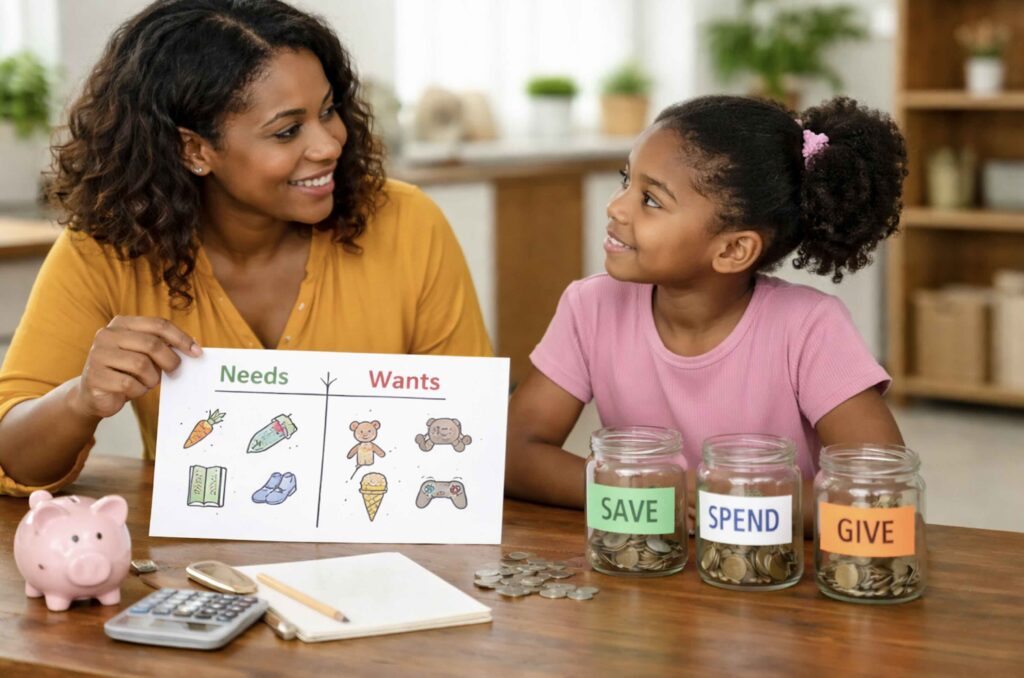
- Identifying needs versus wants
- Comparing prices before buying
- Looking for quality rather than just quantity
- Avoiding impulse buying
- Planning purchases in advance
These skills help children avoid unnecessary spending and make the most of the money they have.
The Relationship Between Financial Literacy and Smart Shopping
Financial literacy and smart shopping skills are closely related. A child who understands financial concepts is better equipped to make wise purchasing decisions. For example, a child who knows the importance of saving is less likely to spend all their money impulsively.
Financial literacy provides the knowledge, while smart shopping is the practical application of that knowledge. Together, they help children:
- Make informed decisions
- Manage limited resources effectively
- Develop financial discipline
- Build long-term financial habits
Factors Influencing Children’s Shopping Behavior
Several factors influence how children make purchasing decisions, including:
1. Parental Influence
Parents play a major role in shaping children’s shopping habits. Children often imitate how their parents spend money, compare prices, and make purchasing decisions.
2. Peer Pressure
Children may feel pressured to buy items because their friends have them. This can lead to unnecessary spending if not properly guided.
3. Advertising and Media
Advertisements, especially on television and social media, can strongly influence children’s desires and spending behavior.
4. Availability of Money
Children who receive regular allowances may have more opportunities to practice spending, which can either improve or worsen their shopping habits depending on guidance.
Teaching Smart Shopping Skills to Children
1. Teaching Needs vs Wants
Children should learn to distinguish between essential items (needs) and non-essential items (wants). This helps them prioritize their spending.
2. Encouraging Price Comparison
Children should be taught to compare prices before making a purchase. This can be done during visits to markets or shops.
3. Budgeting Practice
Giving children a small budget and guiding them on how to spend it helps them learn financial responsibility.
4. Promoting Saving Habits
Encouraging children to save part of their money before spending helps reduce impulsive buying.
5. Involving Children in Shopping Decisions
Allowing children to participate in simple family shopping decisions helps them gain practical experience.
The Role of Schools and Teachers
Schools also play an important role in developing financial literacy and smart shopping skills. Teachers can:
- Introduce basic financial concepts in lessons
- Use practical examples and activities
- Organize classroom exercises on budgeting and spending
- Encourage discussions about money management
These activities make financial education more engaging and easier for children to understand.
Benefits of Financial Literacy and Smart Shopping Skills
Children who develop these skills early enjoy several benefits:
- Better money management skills
- Reduced impulsive spending
- Increased savings habits
- Improved decision-making skills
- Preparation for future financial independence
These benefits extend into adulthood, helping individuals achieve financial stability.
Final Thought
Financial literacy and smart shopping skills are essential for helping children become responsible consumers. By teaching children how to manage money and make informed purchasing decisions, parents and educators can lay the foundation for a financially secure future.
When children understand the value of money and learn how to spend wisely, they develop habits that will benefit them throughout their lives. Investing in financial education today is an investment in a better financial future for the next generation.