
No products in the cart.
Return To ShopA Small Lesson, A Big Future: Teaching Financial Literacy Through Everyday Moments
One afternoon, eight-year-old Jerry stood in a store, holding a brightly colored toy he had wanted for weeks. He looked up at his mother and asked, “Can we buy it today?”
His mother smiled gently and replied, “We can, but remember the savings jar we started for your school books and your new bag?”
Jerry paused. He looked at the toy, then thought about the jar at home where he had been dropping coins every week. After a few seconds, he placed the toy back on the shelf and said, “Maybe I should save more first.”
That small moment may have seemed ordinary, but it was a powerful lesson in financial literacy.
How Everyday Experiences Shape a Child’s Understanding of Money
Children learn more from daily experiences than from formal lectures. They observe how adults spend, save, and talk about money. These small observations quietly shape their attitudes toward finances.
When children are guided through real-life decisions — like choosing between spending now or saving for later — they begin to understand the true value of money.
Financial literacy, in its simplest form, is built through these everyday moments.
The Story Behind a Simple Savings Jar
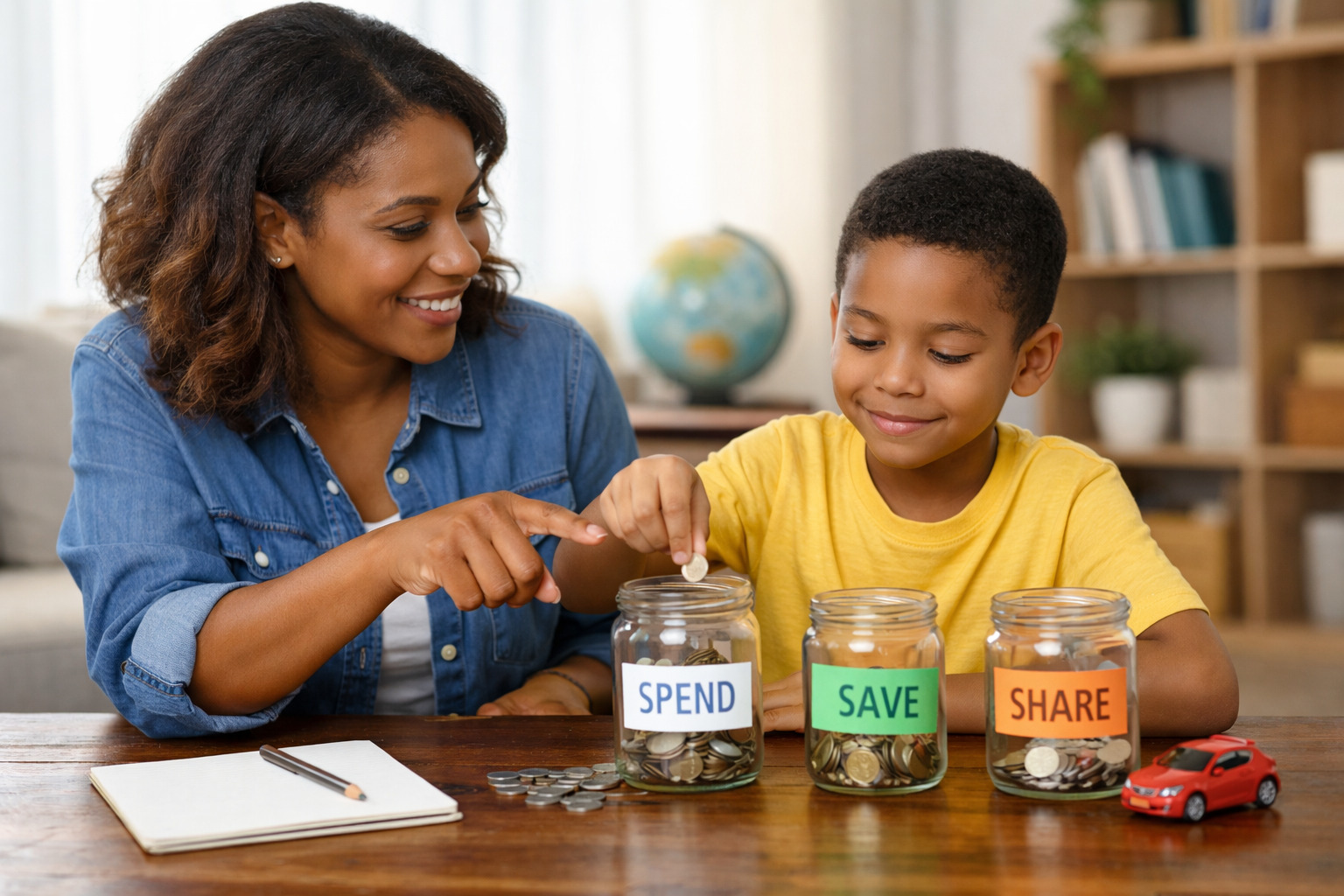
At home, Jerry’s mother introduced three jars labeled: Save, Spend, and Share. Each time he received pocket money, he was encouraged to divide it among the jars.
At first, he did it reluctantly. Saving did not feel as exciting as spending. But over time, something changed. Watching his savings grow gave him a sense of pride and achievement.
Months later, when it was time to buy his school bag, Jerry used the money he had saved. The joy he felt was different — it was deeper and more meaningful than an impulsive purchase.
That experience taught him patience, discipline, and responsibility without a single formal lesson.
Why Stories Like This Matter in a Child’s Development
Children do not naturally understand the concept of money. To them, money can seem endless, especially in a world of digital payments and instant purchases.
Through storytelling and guided experiences, children begin to learn that:
- Money is earned through effort
- Choices have consequences
- Saving requires patience
- Planning brings rewards
These lessons go far beyond finances. They shape character.
From Small Choices to Lifelong Habits
Imagine a child who learns early to save before spending. That child is more likely to grow into a teenager who budgets wisely and an adult who plans responsibly.
Financial literacy is not about restriction; it is about awareness. It teaches children to think, prioritize, and make informed decisions rather than impulsive ones.
A simple decision in childhood — like saving for a book instead of buying sweets — can influence lifelong habits.
The Role of Parents and Educators in the Story
Every parent and educator plays a part in a child’s financial story. Conversations about money do not have to be complicated. They can happen during:
- Grocery shopping
- Giving allowances
- Planning school expenses
- Discussing needs versus wants
When adults model responsible financial behavior, children naturally follow.
Learning centers also play an important role by reinforcing life skills alongside academic learning. When financial awareness is introduced in a structured and supportive environment, children develop a more balanced understanding of responsibility.
At JayEM Learning Center, we believe that true education goes beyond textbooks. By nurturing essential life skills such as financial literacy, we help children grow into thoughtful, confident, and responsible individuals.
A Lesson That Lasts a Lifetime
Years later, Jerry may not remember the exact toy he left on the shelf. But he will remember the lesson behind that moment — that wise choices today create better opportunities tomorrow.
Financial literacy is not taught in a single day. It is built gradually through guidance, patience, and real-life experiences.
And sometimes, all it takes is one small decision, one savings jar, or one meaningful conversation to shape a child’s future.